
Pregnancy monitoring in France relies on a precise schedule of consultations and examinations, but the quality of support varies significantly depending on the chosen pathway. We observe that patients who are better informed about medical milestones and available resources approach each trimester with more informed decisions, particularly regarding screening, birth preparation, and prenatal stress management.
Identifying addictions and prenatal mental health: two underestimated aspects of monitoring

Screening for addictive behaviors during pregnancy remains a neglected aspect of standard prenatal consultations. Tobacco, alcohol, cannabis, psychotropic medications: early detection is crucial for implementing appropriate medical-psychosocial support from the first trimester.
We recommend addressing these topics as early as the first consultation, without waiting for the professional to ask the question. Midwives and doctors trained in detection use validated tools, but the patient’s initiative accelerates the care process.
Perinatal mental health follows the same logic. Prenatal stress, pervasive anxiety, or a depressive episode are not merely discomforts. Untreated chronic stress can impact the course of pregnancy and the parent-child bond after birth. The current recommendation is clear: talk to a professional as soon as feelings exceed ordinary fatigue.
Several resources centralize information on these topics, such as the pregnancy page on (wo)menweb, which addresses both medical stages and the psychological dimensions of the journey.
Early prenatal interview: a structuring appointment for the pregnancy journey
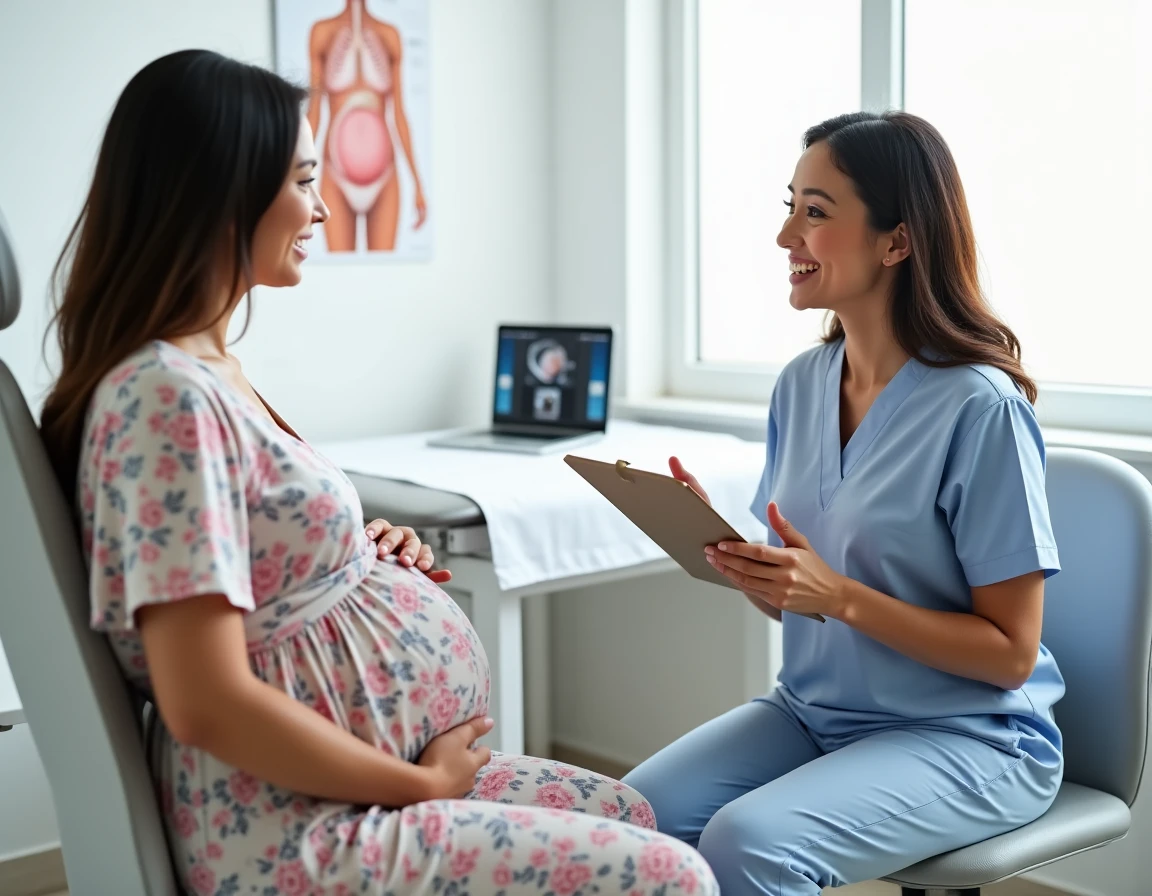
The early prenatal interview is no longer just an advisory meeting left to the discretion of the practitioner. It is now integrated as a mandatory appointment in pregnancy monitoring, typically offered in the fourth month.
Its objective goes beyond the biomedical framework. It aims to assess the overall needs of the pregnant woman (and the couple, if present): psychosocial context, family resources, psychiatric history, working conditions, access to care. It is at this stage that the decision is made regarding referral for enhanced monitoring, specialized consultation in addiction, or social support.
In practice, this interview lasts between thirty minutes and an hour. It can be conducted by a liberal, hospital, or PMI midwife. We observe that patients who prepare for this interview in advance (list of questions, concerns, professional situation) derive significantly greater benefits.
What the early prenatal interview concretely allows
- Identify medical-psycho-social risk factors before they complicate monitoring, including domestic violence or social isolation
- Direct towards birth preparation sessions tailored to the profile (couple, solo, at home, or remotely depending on the facilities)
- Anticipate the choice of maternity based on the level of obstetric risk and the patient’s wishes
- Open the discussion on breastfeeding, the preparation for which begins during pregnancy in IHAB-certified maternity hospitals
Ultrasounds and screenings: technical schedule trimester by trimester
The standard ultrasound monitoring includes three examinations, but their technical content deserves to be detailed beyond the simple “check that everything is fine.”
First trimester ultrasound (between 11 weeks and 13 weeks + 6 days)
This dates the pregnancy, confirms embryonic vitality, and measures the nuchal translucency, an ultrasound marker for the risk of Down syndrome. This measurement, combined with the dosage of maternal serum markers, provides an integrated risk index. A result above the accepted risk threshold leads to the proposal of an invasive diagnosis (amniocentesis or chorionic villus sampling) or a fetal DNA test on maternal blood.
The second trimester ultrasound (around 22 weeks) is the longest. It reviews fetal morphology organ by organ. It is at this stage that the majority of detectable malformations are identified.
The third trimester ultrasound (around 32 weeks) assesses fetal growth, the amount of amniotic fluid, and the position of the placenta. A low-lying placenta at this stage alters the planning of the delivery.
Birth preparation: personalized formats and breastfeeding support
Prenatal support is evolving towards more flexible formats than the classic eight group sessions at the maternity hospital. Some facilities offer individual sessions at home, video consultations, or specific programs for high-risk pregnancies.
A often overlooked point: breastfeeding preparation begins before delivery. In IHAB-certified maternity hospitals (Baby-Friendly Hospital Initiative), dedicated sessions cover the physiology of lactation, breastfeeding positions, and the first signs of difficulty. Waiting until the delivery room to discover breastfeeding increases the risk of early failure.
Criteria for choosing prenatal support
- Check the professional’s qualifications: state-certified midwife, doctor, or certified doula (different and complementary roles)
- Prefer a format that includes the co-parent, as their presence changes the dynamics of support and postnatal preparation
- Ensure that the program covers pain management, delivery positions, and unforeseen scenarios (cesarean, induction)
The choice of birthplace (type I, II, or III maternity hospital, birthing center, home birth) depends on the level of obstetric risk assessed throughout the monitoring. This choice is best discussed during the early prenatal interview rather than postponed to the last trimester.
Pregnancy support is not just about ticking boxes on an examination calendar. Each consultation is an opportunity to reassess needs, adjust monitoring, and prepare for the transition to postpartum, a period whose management is decided well before birth.