A stock 50cc engine, properly maintained, commonly exceeds 20,000 to 25,000 km before major intervention is necessary. This figure, particularly observed on the Minarelli AM6 engine that equips a large portion of geared 50s, drops dramatically as soon as the original configuration is altered. Understanding what actually wears out a small engine allows for extending this lifespan, sometimes significantly.
De-restriction and 70cc kit: the factor that maintenance guides overlook
A de-restricted 50cc or one fitted with a 70cc kit stresses its components well beyond what they were designed for. Piston rings, clutch, and gearbox endure disproportionate stresses, which accelerates mechanical wear. On an AM6 that remains strictly stock, we regularly see engines running without serious issues for over 20,000 km. With a 70cc kit, the first intervention may occur before half of that mileage.
The problem is not limited to the cylinder. The crankshaft, bearings, and primary transmission endure torque greater than their factory specifications. The result: rising maintenance costs and reduced overall longevity. If you aim for maximum mileage, maintaining the original configuration is the most effective lever.
We recommend that any used buyer check if the engine has been modified. A simple inspection of the cylinder (reassembly marks, kit signs) and the exhaust (non-homologated, enlarged diameter) is often enough to decide. For a deeper dive into the topic, a comprehensive file on the lifespan of a 50cc motorcycle details the specific checkpoints for each engine type.
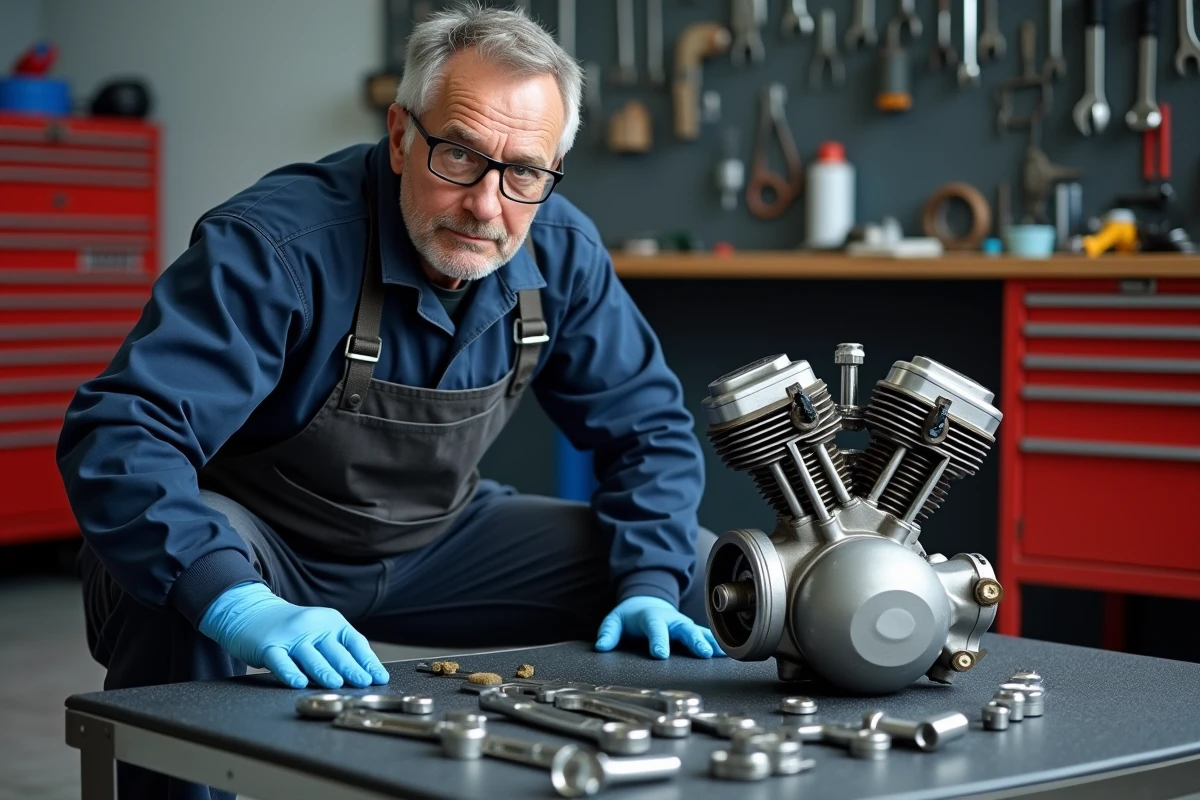
Fork oil change and cycle parts on a 50cc
The maintenance of a 50cc motorcycle is often reduced to engine oil and the spark plug. The cycle parts, however, are rarely mentioned in general maintenance logs. The fork oil change is one of those neglected operations that ultimately degrades road behavior and, by extension, safety.
On a 50cc fork, the oil becomes contaminated with metallic particles and loses its damping properties over the kilometers. Specialized guides recommend regular replacement, especially on inverted fork models where the seals work harder. A leaking fork seal allows oil to escape, which damages the tubes and may require a complete replacement of the front end.
Other cycle parts to monitor
- Steering bearings: excessive play causes wobbling and accelerates wear on the cups. A manual check (front wheel lifted, handlebars turned slowly) takes two minutes.
- Swingarm and bushings: on geared 50ccs, the swingarm operates under constant stress. Worn bushings transmit shocks to the frame.
- Brake discs and pads: the minimum thickness is engraved on the disc. Riding below this threshold not only increases braking distances but also damages the caliper.
Eco-driving applied to 50cc: reduce mechanical wear, not just consumption
Eco-driving is generally presented in terms of fuel savings. On a 50cc, its impact on mechanical longevity is at least as significant. Ademe, cited by Matmut, reminds us that gradual accelerations and moderate revs reduce over-revving and mechanical jolts.
Translated to a small 50cc engine, this concretely means: not taking off aggressively when cold and avoiding keeping the revs in the red zone. A cold engine runs with different play tolerances than when at operating temperature. The first few minutes are the most destructive if the revs are high.
Anticipation in urban driving (releasing the throttle before a light, downshifting rather than braking hard) also decreases wear on the transmission and clutch. On a 50cc scooter with a variator, the rollers and belt last significantly longer with smooth driving than with constant accelerations.
Mileage when buying used: thresholds to know for a 50cc
On larger motorcycles, the 100,000 km mark is often cited as a psychological threshold. On a 50cc, the scale is different. A speedometer showing more than 15,000 km on a 2-stroke engine warrants a thorough inspection of the top end (cylinder, piston, rings). On a 4-stroke (like a 50cc scooter), the margin is wider due to crankcase lubrication, but the valves and timing require checking beyond a certain mileage.
The displayed mileage is just one indicator among others. The condition of the motorcycle often speaks volumes:
- Color of the engine oil: thick black oil indicates neglected maintenance, regardless of the reported mileage.
- Chain or transmission noise: a clattering at idle may indicate a worn chain tensioner or variator.
- Condition of rubber parts (hoses, seals, bushings): the aging of rubber depends as much on time as on mileage. A rarely ridden motorcycle stored outside for several years may have cracked hoses.
- Compression: on a 2-stroke, a simple kick is enough to roughly assess compression. A kick that goes down without firm resistance indicates a tired top end.
The trap of the reset odometer
In the used 50cc market, tampering with the odometer remains common. A mileage counter is not proof of actual mileage. Always cross-check the mileage with the overall condition, maintenance invoices, and ownership history.
Ultimately, the longevity of a 50cc depends less on the brand or model than on three variables: maintaining the original configuration, caring for the cycle parts as much as the engine, and daily driving style. A 50cc treated methodically can accompany its owner well beyond what common beliefs suggest about small displacements.