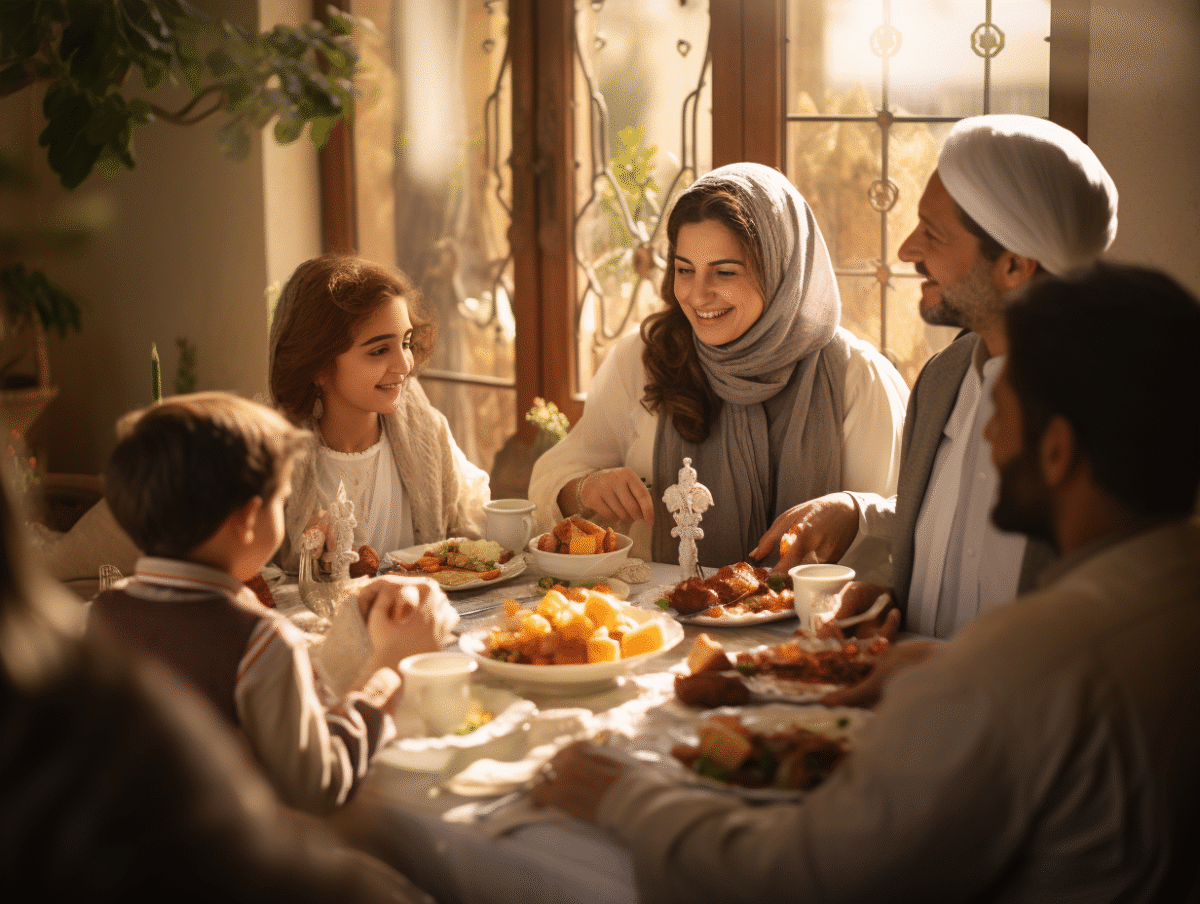
In Muslim culture, familial terms often transcend blood ties to root themselves in the social and spiritual fabric of the community. A term like “Oukhty,” meaning “my sister” in Arabic, perfectly illustrates this dimension. It is used among women to express a sisterhood that goes beyond kinship, encompassing a sense of belonging to the Oumma, the community of believers. This appellation carries the warmth of fraternal bonds and a mutual recognition of shared values. It reflects a way of weaving interpersonal relationships, rooted in faith and cultural practices.
The cultural and emotional dimensions of the term Oukhty
The Arabic language, rich in vocabulary and expressions, serves as fertile ground for the definition of oukhty. This term, at the heart of social interactions, emanates from a culture that values solidarity and affection in interpersonal relationships. Indeed, Arab culture, through Oukhty, expresses not only a fraternal or affectionate bond but also strengthens the fundamental social unity that the family represents in Islam. Terms like Oummi and Abi, meaning “my mother” and “my father,” respectively, contribute to this reinforcement, reflecting deep respect and affection within the Muslim family.
Beyond these ties, the emotional dimension of the term Oukhty reveals itself in the affection that Muslim women have for one another. It is a mark of a strong bond and deep affection that extends well beyond family boundaries to embrace an expanded sisterhood. Social relationships, through the use of Oukhty, are enriched, reflecting cohesion and mutual respect among individuals. This connection is established within the framework of shared values and beliefs, where each woman is a sister to the other, thereby reinforcing solidarity within the community.
Female solidarity finds a particular echo in the term Oukhty. It is expressed in places of worship, Muslim bookstores, and through works like “Advice for the Muslim Woman,” where women are addressed with deference and recognition of their role within the community. Brotherhood and sisterhood in Islam, guided by the Quran and the Sunnah, transcend blood ties to forge an ummah, a global Muslim community, united in faith and religious practice. Oukhty thus becomes a vehicle for social and religious connection, carrying a message of unity and unconditional support among Muslim women.

Oukhty: a vector of social and religious connection in Islam
In the mosaic of Muslim communities, the notion of brotherhood and sisterhood in Islam is expressed with particular intensity. Oukhty, a term heavily laden with spiritual connotations, weaves a strong and affectionate bond among Muslim women, thus creating a sisterhood that transcends origins and statuses. This fraternity, framed by the precepts of the Quran and the Sunnah, establishes a social harmony that is the cornerstone of community life.
Sisterhood, embodied by the term Oukhty fillah my sister in Allah –, illustrates how the Muslim religion values spiritual ties, sometimes even beyond blood ties. These bonds are not restricted to the private sphere but extend into the public space, where Muslim women support and encourage each other in practicing their faith and conducting their daily lives.
The male equivalent of Oukhty, Akhy my brother –, resonates with similar strength among Muslim men. These terms, Oukhty and Akhy, are pillars of a social cohesion that strengthens social relationships within the ummah, the global Muslim community. They remind that every member of the community is the guardian of their brother or sister, a responsibility rooted in prophetic teachings.
Female solidarity, in particular, manifests in various spaces of social life, such as Muslim bookstores, where works like “Advice for the Muslim Woman” are available. These places and writings encourage Muslim women to actively engage in community life while highlighting the central role they occupy. The Muslim community, characterized by a constant quest for the common good, finds in the use of these familial terms an expression of its desire for unity and solidarity.