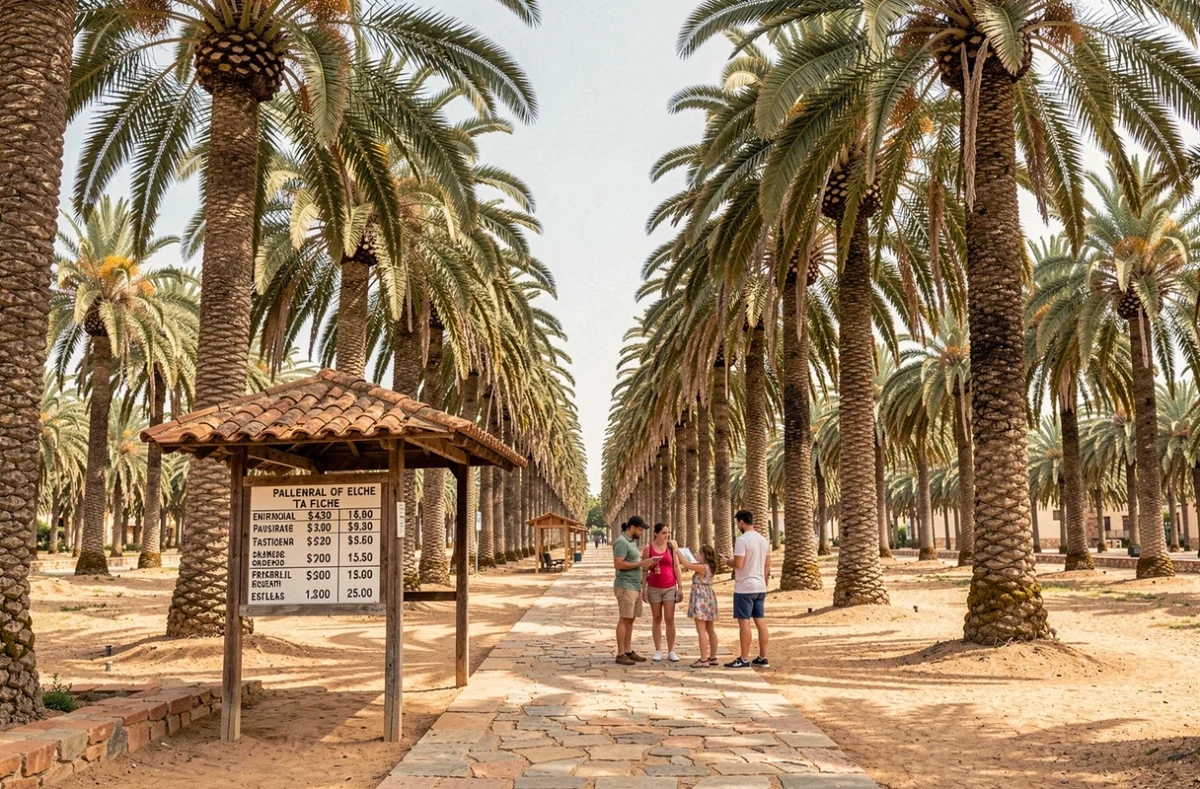
The Elche Palm Grove does not operate like a typical tourist site with a single ticket office. It encompasses several dozen huertos (palm gardens) spread throughout the urban fabric, some of which are free to access while others charge a fee. Understanding this organization is the first step in estimating the actual budget for a visit.
Elche Palm Grove: a collection of gardens, not a single site
The area designated as a UNESCO World Heritage site includes 67 huertos, approximately 45,000 palm trees, and 144 hectares. This protected zone does not cover all the palm trees in the municipality, which extend well beyond.
In practice, walking among the palm groves along the streets and in public spaces costs nothing. The municipal park, for example, is an open space accessible for free. Fees only apply to the defined gardens, such as the Huerto del Cura, and guided tours organized by the tourist office.
This distinction is often absent from travel guides, leading to confusion: many visitors think they need to pay a single ticket for “the Palm Grove.” In reality, you can find the rates at the Elche Palm Grove on CCVO 70 to precisely identify which areas are paid and at what price.
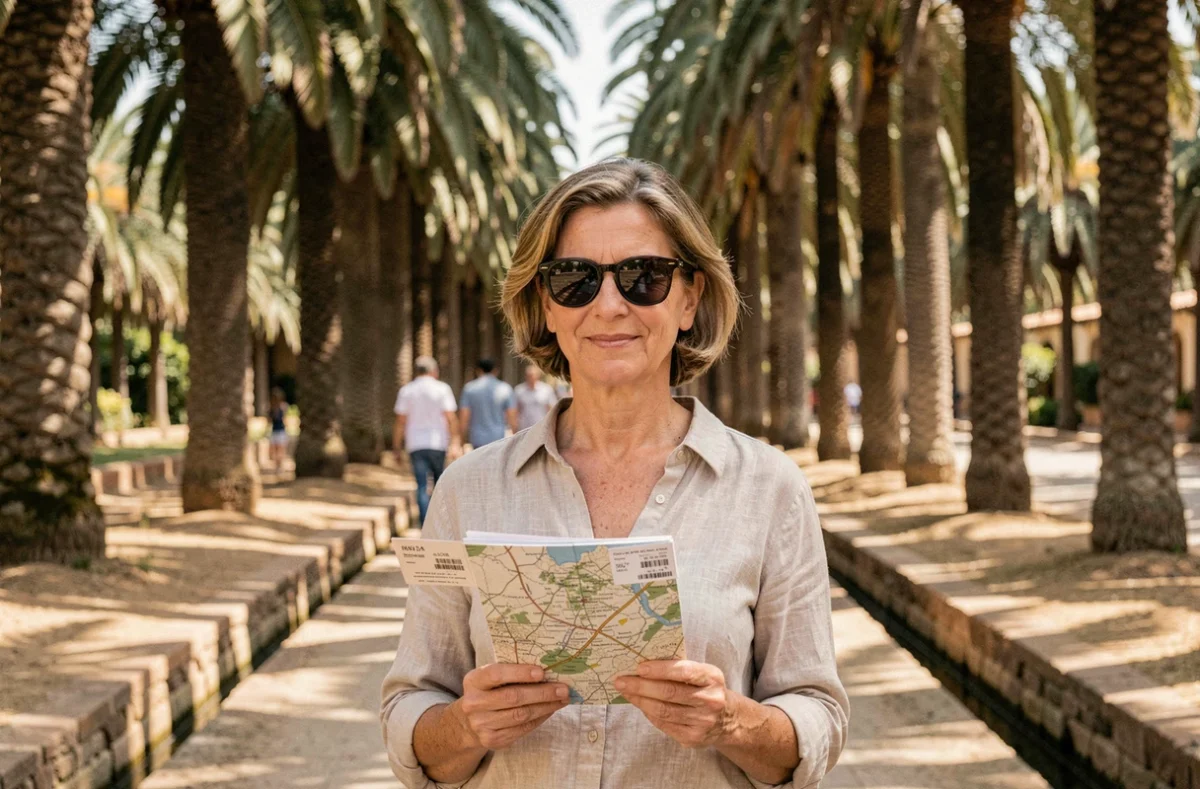
Rates for Huerto del Cura and guided tours in Elche
The Huerto del Cura is the most visited garden in the Palm Grove. It is a landscaped botanical garden, featuring identified species, sculptures, and the famous imperial palm with multiple trunks. Its entrance fee is charged year-round, with rates varying according to the visitor’s profile (adult, child, senior, group).
The guided tours offered by the Elche tourist office represent another expense. They last about an hour and a half and cover the municipal park, the Basilica of Santa María, the old town, and the Glorieta. The route passes through the palm groves and follows the monumental road.
Guided tour schedules by season
The time slots change three times a year, aligned with the clock changes:
- From late March to late June, and then from September to late October: tours at 11:30 AM from Sunday to Thursday, with an additional slot at 5:00 PM on Fridays, Saturdays, and holidays.
- In July and August: tours at 11:30 AM and 6:30 PM from Monday to Saturday, only at 11:30 AM on Sundays.
- From late October to late March: tours at 11:30 AM on weekdays, with a slot at 4:00 PM on Fridays, Saturdays, and holidays.
No guided tours are scheduled on January 1st or December 25th. For intermediate holidays, the tourist office confirms afternoon slots on a case-by-case basis.
Discounts and free admissions: what affects the budget
The paid gardens of the Palm Grove generally apply reduced rates for children, seniors, and groups. Residents of Elche sometimes benefit from specific conditions, especially during occasional events.
The municipality of Elche, for example, has offered free or discounted entries on the occasion of World Tourism Day, as part of a week dedicated to culture and heritage. These promotions are not permanent and depend on the local cultural calendar.
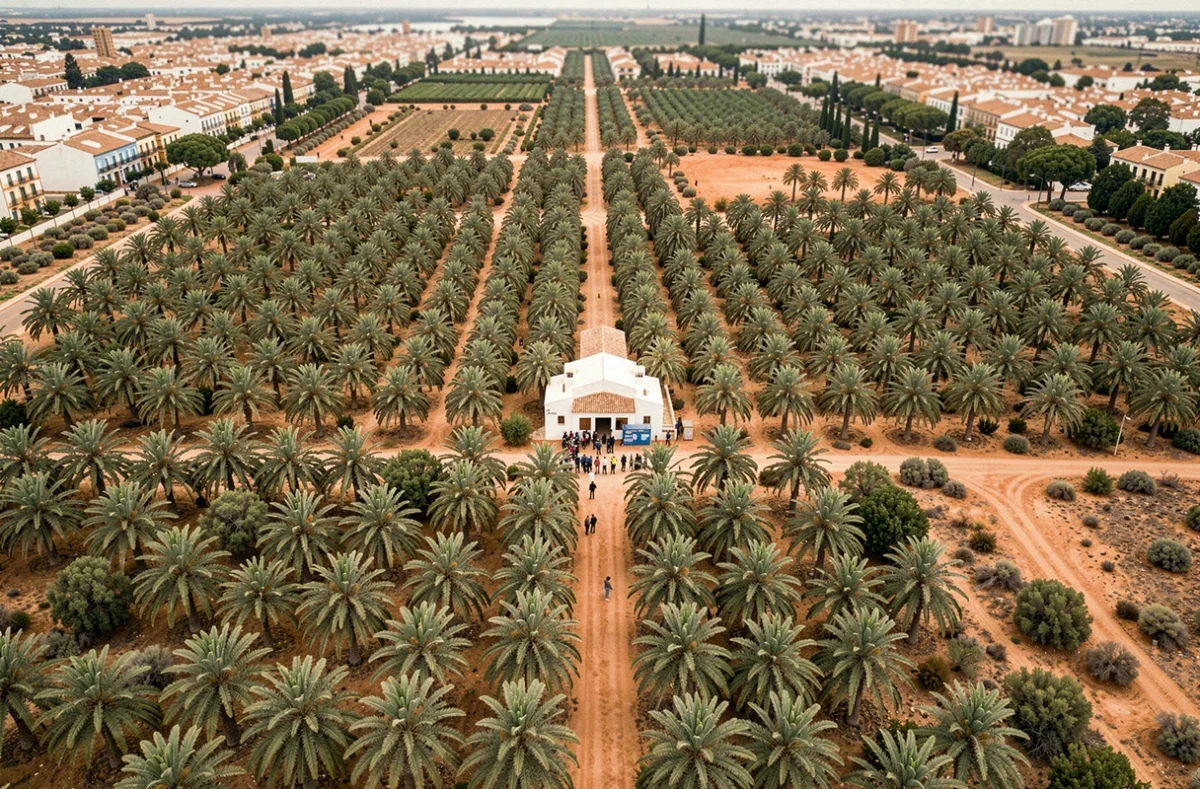
Moreover, the public spaces of the Palm Grove remain free all year round. The municipal park, palm-lined paths, and several open huertos allow visitors to explore the site without spending a dime. Only the landscaped gardens with ticketing and guided tours require a budget.
Historical irrigation system: an invisible heritage in the fees
One of the most remarkable aspects of the Elche Palm Grove is not reflected in any entrance ticket. The irrigation system inherited from the Arab period, organized around the Acequia Mayor and secondary channels, has allowed this palm grove to thrive in an area where rainfall is scarce and irregular.
This hydraulic network explains why the Palm Grove still exists after several centuries. Without it, the date palms would not have survived in the semi-arid climate of southern Alicante province. The UNESCO inscription recognizes this system as an integral part of the protected site, not just the trees themselves.
No garden specifically charges for the discovery of this hydraulic heritage. The guided tours from the tourist office mention it during the route, but it is by strolling freely along the canals that one can appreciate the scale of the work. A free angle of visit that is among the most interesting aspects of the site.
Elche Palm Grove or Alicante Palm Grove: do not confuse
The city of Alicante also has remarkable palm trees, which sometimes creates confusion in online searches. The Alicante Palm Grove and the Elche Palm Grove are two distinct sites, separated by more than twenty kilometers.
Only the Elche Palm Grove is recognized as a UNESCO World Heritage site. It is also the largest palm grove in Europe, with a protected perimeter significantly larger than the planted areas in Alicante. The rates, visiting conditions, and cultural offerings differ entirely between the two.
Before booking a guided tour or a ticket for a garden, checking that the address corresponds to Elche (Elx in Valencian) avoids disappointment on the day itself, especially for visitors staying in Benidorm or on the Costa Blanca who plan a detour during the day.
The budget for discovering the Elche Palm Grove primarily depends on what you choose to visit. Walks between the public huertos are free, while the landscaped gardens and guided tours represent a moderate cost, often lower than what comparable heritage sites charge in Spain.