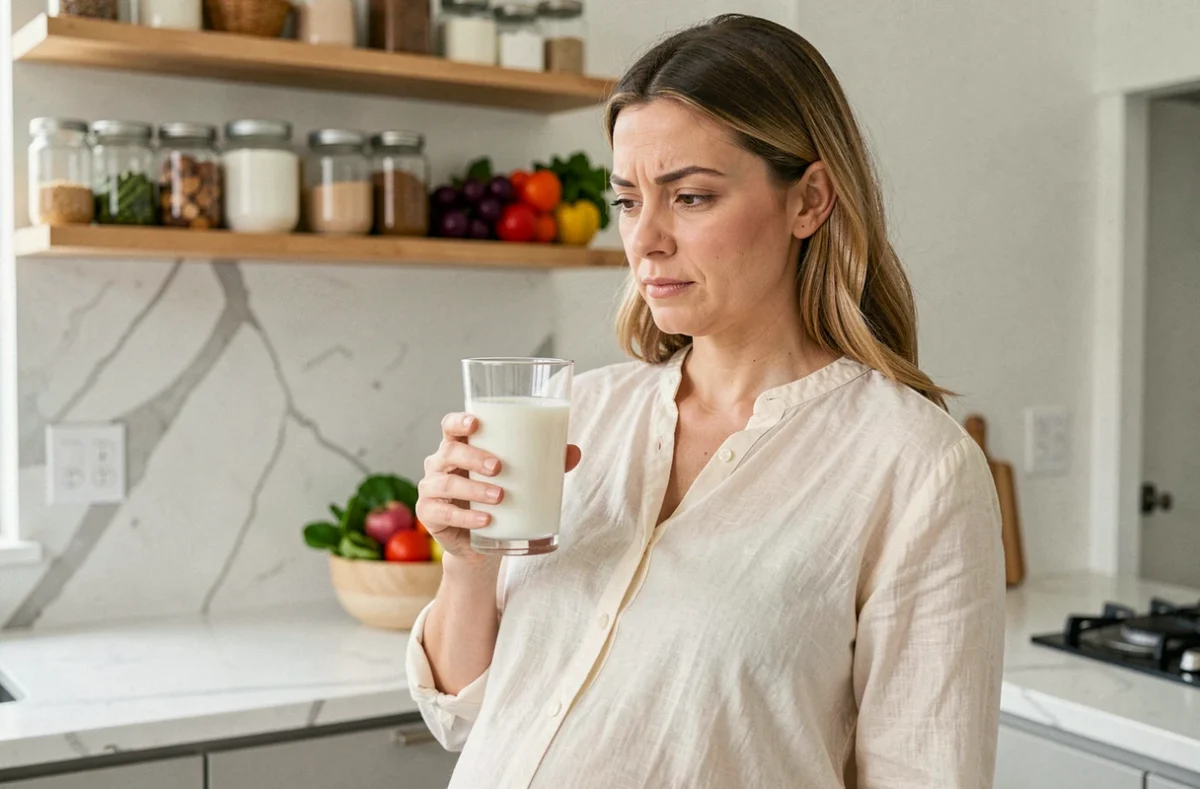
Raw milk, by definition, has not undergone any thermal treatment beyond 40 °C. Its native bacterial flora is therefore intact, including any pathogens that may be present from the milking process. For a pregnant woman, whose cellular immunity is physiologically modulated downwards, this microbiological characteristic radically changes the risk profile.
Listeria monocytogenes and pregnancy: transplacental contamination mechanism
Listeria monocytogenes is a facultative intracellular bacterium capable of crossing the intestinal barrier and then the blood-placental barrier. In the mother, the infection often manifests as a mild flu-like syndrome, sometimes completely asymptomatic.
The real danger lies on the fetal side. The bacterium colonizes the placenta and can cause chorioamnionitis, premature birth, severe neonatal infection, or even fetal death in utero. The incubation period for listeriosis can reach eight weeks, complicating the correlation between a suspect meal and the onset of symptoms.
Public Health France reported 619 cases of listeriosis in France in 2024, with a consistently upward trend since 2021. Relative to the population, this represents about 9 cases per million inhabitants. Pregnant women and newborns are among the most affected groups by severe forms.
The risks associated with raw milk during pregnancy are detailed on the Néo Santé website in detail, with practical recommendations tailored to each trimester.
Raw milk and soft cheeses: the role of water activity in bacterial survival
Not all raw milk cheeses present the same level of risk. We observe that the most common confusion among patients concerns the amalgamation of “raw milk” and “systematic danger,” without distinction of cheese-making technology.
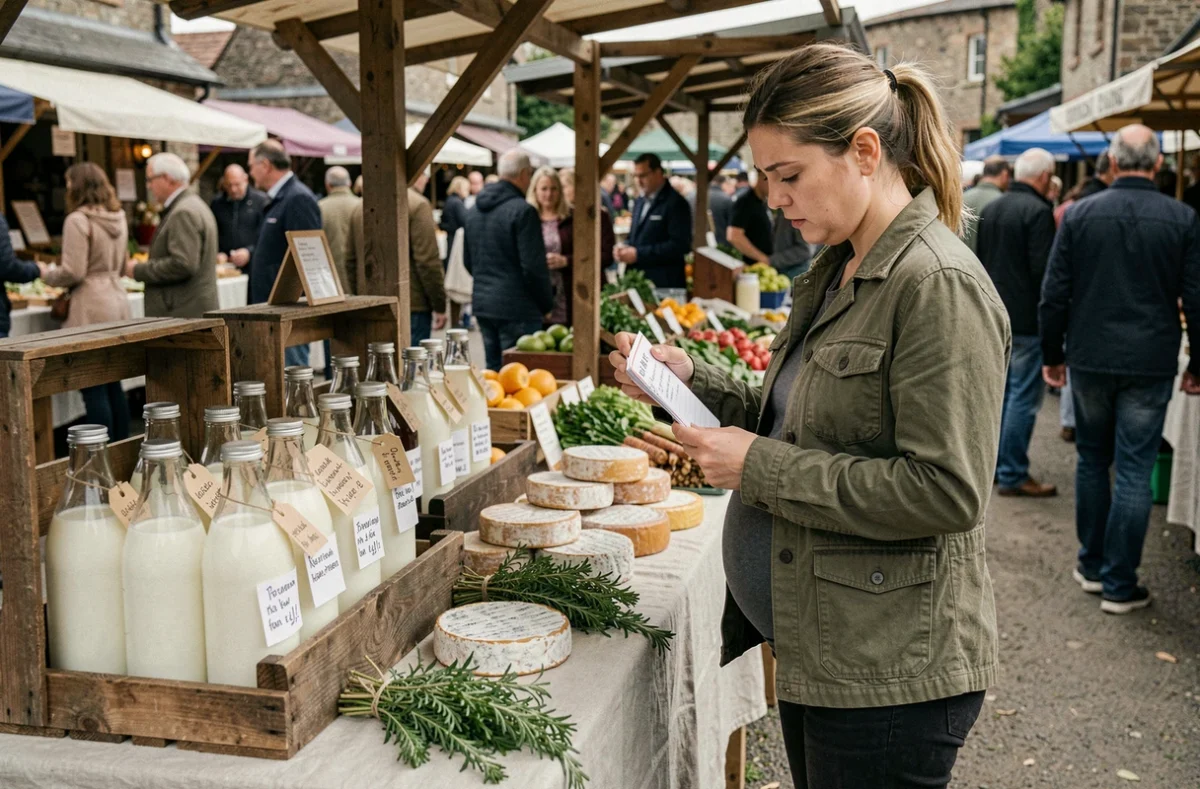
The determining parameter is water activity (aw) combined with the aging duration. A soft cheese like raw milk camembert retains a high aw and a pH favorable to the multiplication of Listeria. In contrast, a pressed cooked cheese aged for several months (comté, beaufort) presents a significantly less favorable environment, even if it is made from raw milk.
The recommendation from ANSES does not impose an absolute ban on all raw milk products. It primarily targets:
- Soft cheeses with a bloomy or washed rind made from raw milk (brie, reblochon, mont d’or, maroilles), whose water content remains high throughout maturation
- Raw milk consumed as is, unboiled, as can be found for direct sale at the farm
- Artisanal fresh cheeses made from raw milk, which have not undergone pasteurization or prolonged aging
We recommend removing the rind from cheeses consumed during pregnancy, including pressed cooked cheeses. The surface is the most likely contamination zone, especially for cheeses cut at the creamery.
Listeriosis, toxoplasmosis, and overall food risk during pregnancy
The focus on raw milk sometimes masks a broader spectrum of risk. Cooked deli meats and refrigerated prepared dishes are also among the categories regularly involved in French outbreaks, according to data from ANSES. Reducing prevention to cheese alone creates a false sense of security.
Toxoplasmosis, often mentioned in the same breath as listeriosis, involves a completely different pathogen (Toxoplasma gondii, a parasite) and distinct routes of contamination (undercooked meat, fruits and vegetables contaminated by soil). Raw milk is not a usual vector for toxoplasmosis.
The common point remains thermal destruction. A core cooking temperature above 70 °C destroys both Listeria and Toxoplasma. A gratin made with raw milk reblochon, heated to a high temperature in the oven, presents a considerably reduced residual risk compared to consuming the same cheese cold.
Refrigerator and storage: an underestimated risk factor
Listeria monocytogenes is distinguished from most foodborne pathogenic bacteria by its ability to multiply at low temperatures. The refrigerator slows growth but does not stop it. This point is often overlooked by patients who believe that food stored in the cold is necessarily safe.
Concrete prevention measures to apply in the refrigerator during pregnancy are as follows:
- Strictly adhere to expiration dates, without relying on the appearance or smell of the product, which are insufficient to detect Listeria
- Consume leftovers and opened products within 24 to 48 hours maximum, compared to the 3 to 5 days usually tolerated outside of pregnancy
- Physically separate raw foods (meat, fish, earthy vegetables) from dairy products and ready-to-eat meals
- Regularly clean the refrigerator, especially the vegetable bins and door seals where the bacteria can form biofilms
A product subject to an official recall should never be “rescued” by cooking. Even if heat destroys the bacteria, the withdrawal procedure must be fully respected.
What to do after accidental ingestion of raw milk during pregnancy
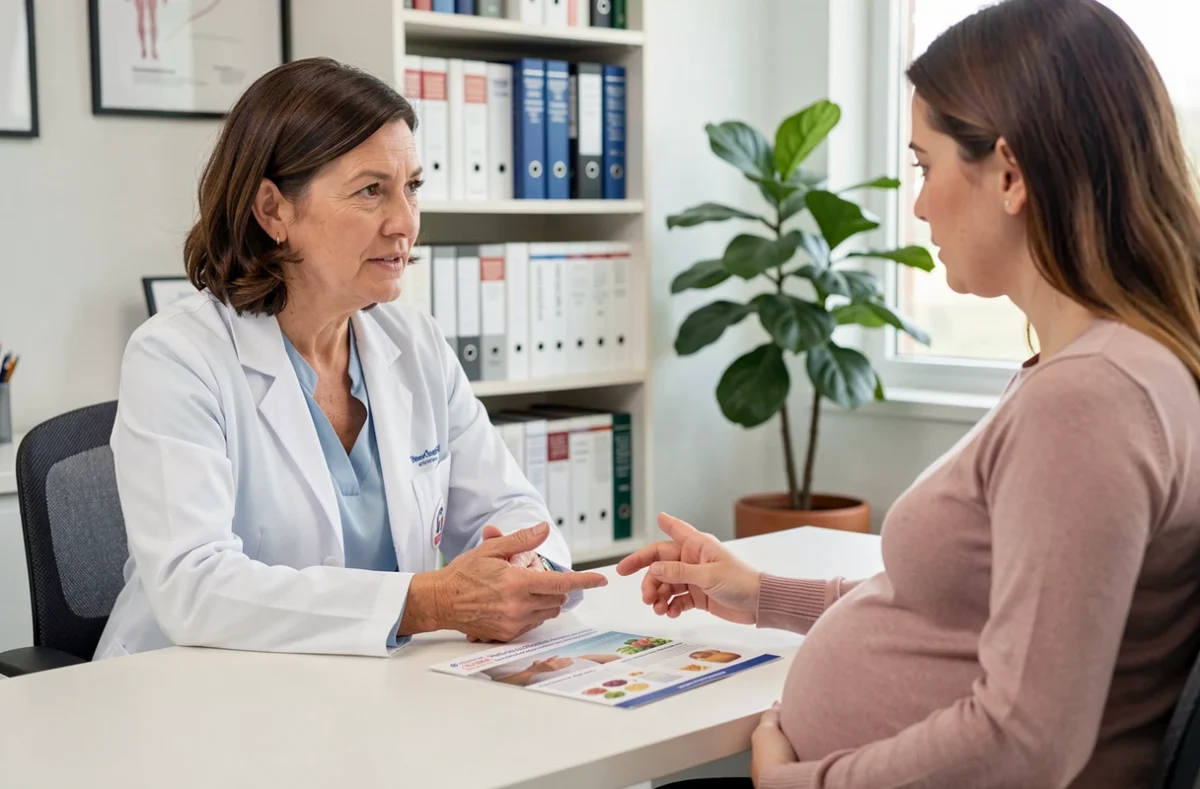
Accidental ingestion of raw milk cheese is common (cheese platter at friends’ homes, incomplete labeling). The probability that a specific cheese is contaminated with Listeria remains statistically low, but vigilance is necessary.
We recommend noting the date of ingestion and monitoring for any febrile symptoms, even mild, in the weeks that follow. Fever, body aches, unusual headaches, or persistent digestive issues warrant prompt consultation and the performance of a blood culture.
The monitoring window extends up to eight weeks after exposure. Beyond this period without symptoms, the risk associated with this specific episode can be considered eliminated. The stress generated by accidental ingestion should not overshadow the clinical approach: note, monitor, consult if necessary, without giving in to panic.