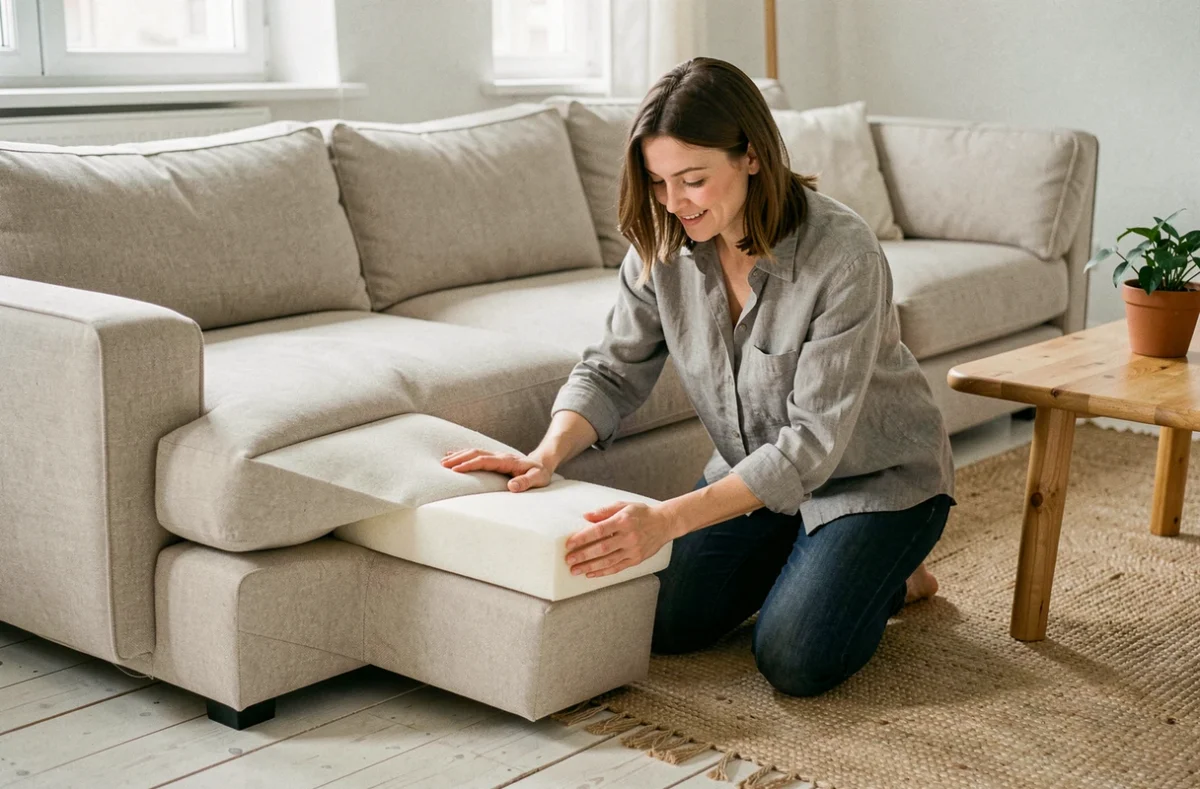
Every evening, you sink a little deeper into your KIVIK sofa, and the comfort you enjoyed during the first few months feels like a distant memory. Before ordering new foam, there’s one often-overlooked step that can make all the difference: figuring out whether the problem really lies with the padding, the support beneath the cushions, or the frame itself. A worn cushion and a sagging frame need different fixes, and confusing the two is a waste of time and materials.
Worn cushion, sagging support or tired frame: diagnose the problem first
A sagging KIVIK sofa can have three distinct causes. Confusing them can lead to unnecessary repairs.
First, remove all the seat and back cushions. Sit directly on the sofa base, where the webbing or support panel sits. If you feel a distinct dip or sink too far down, the problem is with the support, not the cushion.
Next, lay each cushion flat on the floor and press down in the center with your palm. If a cushion doesn’t regain its shape within a few seconds, it has lost its resilience. Compare the most-used seat with one that gets less use: the difference in firmness is often telling.
Finally, check the wood or particleboard frame. A crack, creaking at the corners or sideways movement points to a structural problem. In that case, replacing the foam alone won’t solve anything. Reinforce the frame first (with wood glue or metal brackets) before working on the upholstery.
This three-step diagnosis takes less than ten minutes. It can save you from investing in expensive new padding when the real culprit is a loose strap or weakened frame member.
KIVIK seat cushion foam: density, firmness and thickness are not the same
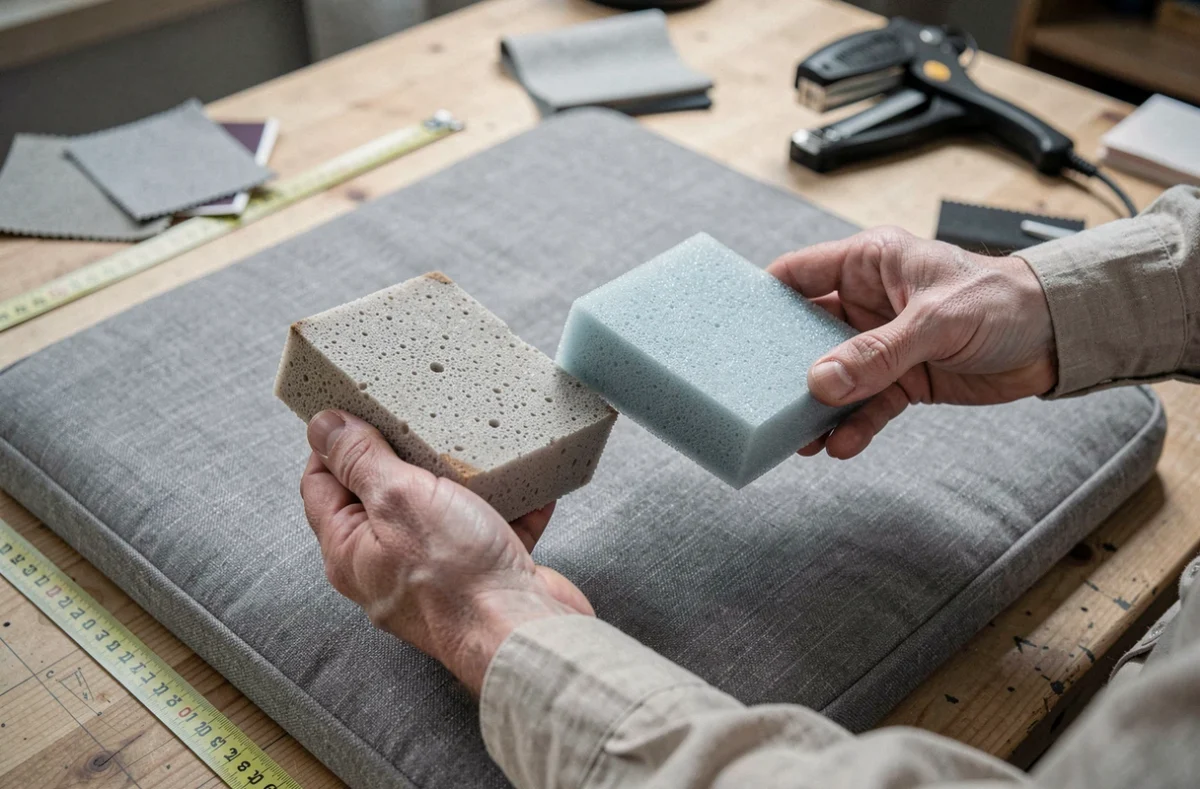
You’ve confirmed that the cushions are the problem. Now you need to choose the right foam—and this is where things can get confusing. Many people focus solely on density, assuming that denser foam will be more comfortable. That’s misleading.
Density is the weight of the material per unit of volume. It affects durability: dense foam is more resistant to compression over time. Firmness, on the other hand, describes resistance to compression—in other words, how the foam feels under your body. Foam can be dense but soft, or lightweight but firm.
- Density: Choose a level high enough to prevent the foam from sagging after a few months. Foam with too low a density will quickly recreate the original problem.
- Firmness: Choose it based on your build and preferences. Someone with a heavier build will need firmer foam to avoid “bottoming out.”
- Thickness: It must match the inside of the KIVIK cover. Foam that’s too thick will distort the cover and create unsightly wrinkles, while foam that’s too thin will shift around inside.
To explore options compatible with this specific model, Marie Carotte’s KIVIK sofa upholstery guide explains foam combinations suited to the original dimensions.
KIVIK seat and back cushions: two areas, two approaches to padding
Treating the seat and back in the same way is a common mistake. The two areas serve different purposes and are subject to different mechanical stresses.
Seat cushion padding
The seat supports your full body weight when you sit down. It needs foam that is both firm and resilient, able to compress and then return to its original shape. A block of high-resilience (HR) foam works well here.
A seat that’s too soft can lead to postural fatigue: you keep shifting position to compensate for the lack of support, which wears out the padding even faster.
Back cushion padding
The back cushion takes more diffuse pressure spread over a larger area. It can use softer padding, sometimes with a layer of polyester fiber for a plush feel. KIVIK back cushions are often filled with a foam-and-fiber blend from the factory.
If you replace only the back cushion foam with a rigid block, leaning back will feel uncomfortable. The back cushion should conform to your back, not push against it.

Measuring and cutting foam for KIVIK covers
You’ve chosen your materials. Cutting the foam is what determines the final result. KIVIK covers are removable and zippered, which makes the job easier but calls for precision.
Measure the inside of each cover while it’s laid flat, noting the length, width and depth. Keep in mind that the internal seams slightly reduce the available space. Add one centimeter to the length and width so the foam fills the cover properly without leaving soft spots in the corners.
For cutting, an electric bread knife gives a cleaner result than a utility knife when working with thick foam. Mark your measurements directly on the foam with a felt-tip pen, then cut in a single pass without forcing the blade.
- Check that the cover closes without putting too much strain on the zipper. If the zipper is hard to pull, reduce the foam thickness by a few millimeters.
- Wrap the foam block in a layer of polyester batting before sliding it into the cover. This smooths the edges and gives the cushion a fuller look.
- Put the cushion back on the sofa and sit on it right away to test it. The seat should compress slightly, then provide steady support.
A well-sized cushion regains a natural shape, rather than looking like a geometric block placed on the frame. This finishing touch is what sets a professional-looking, long-lasting result apart from a DIY job.
The KIVIK’s modular design means each component can be handled separately. Take advantage of this by reupholstering one cushion at a time, testing the result for a few days, and adjusting the firmness or thickness of the next cushion if needed. Working in stages means you won’t have to start all over if you choose the wrong foam.